 |
 |
Biodiversity Centre For Become a Member To pay by cheque please complete a membership form What's NewJune 23, 2024 - Seabird Colonies of British Columbia: NewsWildlife Afield Vol. 18:1&2 Seabird Colonies of British Columbia
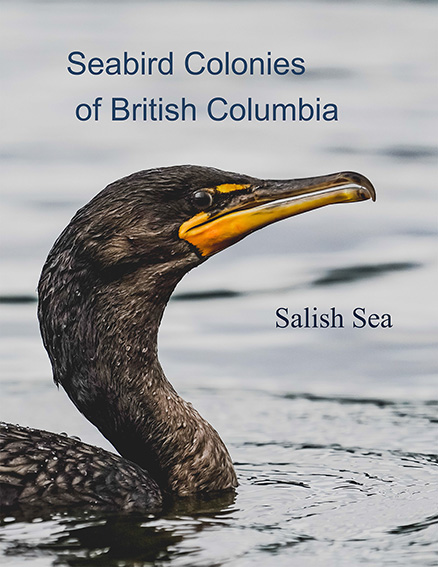
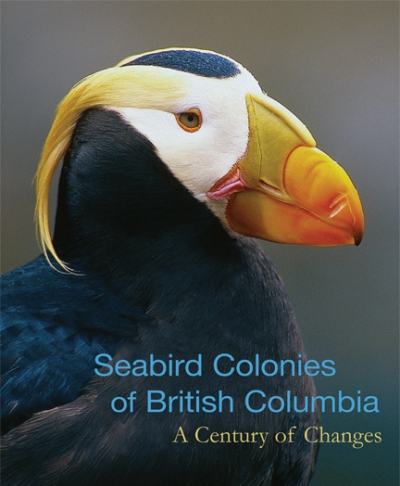
The fourth and final volume of the series on Seabird Colonies of British Columbia is now complete. This volume considers all known seabird colonies in the BC portion of the Salish Sea, from the north end of the Strait of Georgia to Victoria at the south end of Vancouver Island. It presents the status and historical changes of seabird breeding populations at all known breeding sites, including in urban areas that have become important habitats and now support large proportions of the seabird breeding community in the Salish Sea. Colony histories, regional summaries, and in-depth analyses of population trends for the 10 colonial-nesting seabird species that have been recorded breeding in the Salish Sea are presented, current through 2023. Introductory sections describe persons and institutions that have contributed to our knowledge of seabird breeding populations in the area. Historical impacts and current threats to nesting populations and established and recommended conservation measures are reviewed. The Salish Sea area is heavily urbanized, with expanding human populations exerting tremendous and increasing pressure on the environment. This volume is intended as an aid to the conservation and management of nesting seabirds and the marine ecosystems they depend on in this intensely developed region. In addition to presenting data current through 2023 for the Salish Sea colonies, an appendix to this fourth volume also updates, to 2023, population estimates and trends for all colonies on the BC coast. Tables in Appendix 1 provide updated population estimates for every known current and historical colony site in Haida Gwaii and the BC Outer Coast areas that were addressed in volumes 2 and 3 of this series. Summary statistics for the entire coast are also presented, updating to 2023 the provincial summaries present in volume 1. As with previous volumes, this final volume is illustrated with location maps and hundreds of photographs. As well, there are many anecdotes that recount experiences of the authors and relate interesting details and musings about seabird natural history and conservation. Lovely paintings by artist Mark Hobson and drawings by Robert Butler are also included. Almost all photographs are presented in colour in this volume. The Biodiversity Centre for Wildlife Studies have decided that this volume (Volume 18, Numbers 1 & 2) would be issued primarily as an online publication. In the future, we may arrange to make printed versions available on demand, but for now, we are freely releasing the volume for download. It can be downloaded here or a paperback edition of the Salish Sea volume is available for order through Amazon.ca
Wildlife Afield Vol. 17:1&2 Seabird Colonies of British Columbia
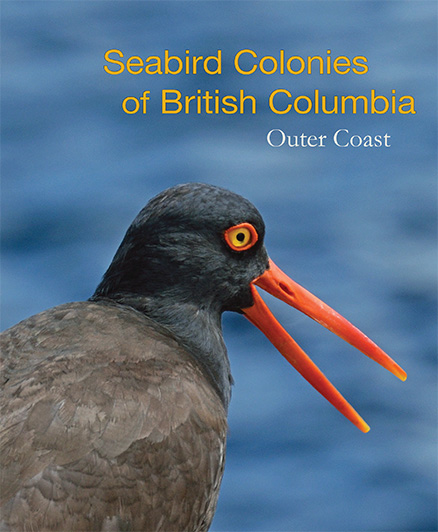
This is the third volume in the four-volume series on breeding seabirds in British Columbia. As with the first two volumes, it takes a novel approach, blending data compilation and interpretation with natural history and human adventure stories in a lavishly illustrated text. An essential reference work that also endeavours to be entertaining. This third volume presents the status and historical changes of seabird breeding populations at all known colonies along the BC outer coast from the Alaska border in the north to Race Rocks at the southern tip of Vancouver Island. Breeding populations and trends are summarized for four regions: the northern mainland coast, Queen Charlotte and Johnstone straits, Scott Islands, and the west coast of Vancouver Island. The majority of the total seabird breeding population in BC nests in these regions, including major proportions of the Fork-tailed and Leach’s storm-petrel, Pelagic Cormorant, Black Oystercatcher, Glaucous-winged Gull, Common and Thick-billed murre, Cassin’s and Rhinoceros auklet, and Tufted Puffin populations. The Scott Islands are the most important breeding area in the world for Cassin’s Auklet and a large proportion of the world population of Rhinoceros Auklets nests at a few colonies in Queen Charlotte Strait and on Triangle Island in the Scott Islands. All available data have been compiled to provide a history of seabird nesting records and known changes at each colony. Introductory sections describe persons and institutions that have contributed to our knowledge of seabird breeding populations in the area. Historical impacts and current threats to nesting populations and established and recommended conservation measures are reviewed. The book goes far beyond what is typically included in such a scientific document. Though it will be an essential reference for government and consulting biologists involved in proposals and projects in the marine environment, it will also appeal to a wider audience interested in the natural history of the BC coast or in the exploits of those who have mounted expeditions to the remote islands where seabirds nest. The book is profusely illustrated with over 700 photographs and drawings and includes many anecdotes that recount experiences of the authors and others and relate interesting details and musings about seabird natural history and conservation. Wildlife artist Mark Hobson has generously donated ten of his wonderful paintings of coastal themes that are added as coloured inserts. BC artist and scientist Robert Butler has contributed delightful drawings of each seabird species that he created specifically for this volume. He also shared with us some of his lovely watercolour paintings that capture the magic of places like Triangle Island on the BC outer coast. This volume continues the decades-long commitment of authors Michael Rodway, Wayne Campbell, and Moira Lemon to promote the conservation of breeding seabirds in BC. Upcoming Volume 4 concerns seabird breeding populations at colonies in the highly-urbanized and disturbed inner waters of the BC Salish Sea. Copies are being mailed to members and are also available from the Biodiversity Centre for Wildlife Studies without a membership for $60 CDN (to cover increased printing and postage costs; all proceeds to BCFWS). Wildlife Afield, Volume 15, Number 1
Wildlife Afield Vol. 16:1&2 Seabird Colonies of British Columbia
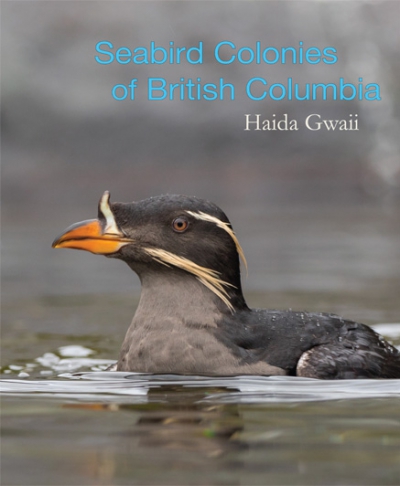
This second volume of the seabird catalogue presents the status and historical changes of seabird breeding populations at all known colonies in Haida Gwaii. It includes seabird memories of the Haida people, reports from early geological and anthropological expeditions, and information gathered by numerous institutions, independent observers, graduate students, and wildlife consultants. Those have been compiled to provide a history of visits and known changes at each colony site where seabirds have been known to nest in the Haida Gwaii archipelago. Introductory sections describe persons and institutions that have contributed to our knowledge of seabird breeding populations in the area. There is also a review of previous impacts and current threats to nesting populations, including those from human disturbance, commercial and recreational fishing, and native and non-native predators. Of great conservation concern for the seabirds of this archipelago is the continued spread of introduced rats and raccoons to the colony islands. As with the first volume, this work is not just a valuable reference document. The volume begins with a 10-page tribute to Rudi Drent, whose early concern for nesting seabirds in British Columbia and his enthusiasm inspired this present treatise. In addition to the scientific text, this volume is lavishly illustrated with over 600 photographs and drawings. Wildlife artist Mark Hobson has generously donated seven paintings of coastal themes that are added as coloured inserts. Also scattered throughout the text are numerous anecdotes that detail fascinating aspects of the lives of nesting birds or the vivid memories of the authors and other contributors. This second of the four-volume compendium is the product of decades of work, dedication, and commitment to the conservation of breeding seabirds in British Columbia by authors Michael Rodway, Wayne Campbell, and Moira Lemon. Upcoming volumes to be published in Wildlife Afield: Volume 3 will present detailed histories of seabird populations nesting at BC colonies along the outer mainland and Vancouver Island coasts; Volume 4 concerns the seabird colonies in the Salish Sea. Order your copy today Purchase by cheque ***** Wildlife Afield, Volume 14, Number 2
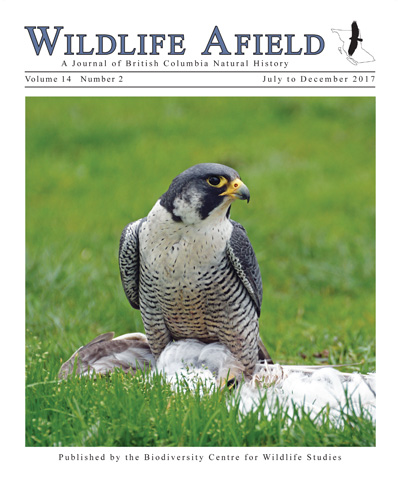
Wildlife Afield, Volume 14, Number 1
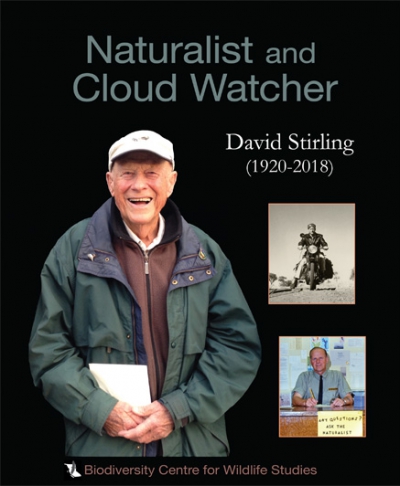
The Quintessential Naturalist A new biography, Naturalist and Cloud Watcher, is now available on the life and accomplishments of long-time BC naturalist David Stirling. The book chronicles David’s early subsistence life in Athabasca, Alberta; two years of wanderlust on a motorcycle with his wife exploring Australia; developing the successful BC Parks nature interpretation program; mentoring hundreds of aspiring young naturalists; and in retirement leading wildlife tours to all the world’s continents. He attributed his 97-year life to good genes and following the advice of Ralph Waldo Emmerson who wrote, Adopt the pace of nature; her secret is patience. The publication, written by long-time friends Wayne Campbell and Barbara Begg, also includes reminiscences of ten friends and a comprehensive list of over 200 articles by David, many of which were published in Victoria Naturalist and BC Naturalist. David authored six books as well. The 80-page book has four coloured inserts highlighting David’s life and contains hundreds of black-and-white photographs and sketches. It costs $20.00 (including postage) to cover production and postage expenses. The book is available from the Biodiversity Centre for Wildlife Studies online at www.wildlifebc.org (PayPal) or by cheque at BCFWS, 3825 Cadboro Bay Road, PO Box 55053, Victoria, BC V8N 6L8. *****
Seabird Colonies of British Columbia
This seabird catalogue will surprise you – it is not just a valuable reference document. In addition to the scientific text, with an exhaustive compilation of 631 published and unpublished sources, are almost 300 photographs and drawings that document the private lives of seabirds and the field experiences of the surveyors. Two provincial artists donated eight paintings of coastal themes that are added as coloured inserts. Also scattered throughout the text are numerous shaded inserts that include fascinating aspects of the lives of nesting birds and vivid memories of the authors. Some anecdotes like A Life Lesson to Remember and Lost in a Fog Bank relate events that could have turned out differently! Authors Michael Rodway, Wayne Campbell, and Moira Lemon have brought to fruition five decades of work in this updated seabird catalogue for British Columbia. They have a combined 127 years of seabird experience and have visited all colonies at least once and some many times. This introductory 298-page volume provides an overview of nesting seabirds in British Columbia, including survey history and methods, provincial population summaries, species accounts, threats, and conservation measures. Three subsequent volumes, also to be published in Wildlife Afield, will present detailed histories of every known seabird colony in BC. Order your copy today Purchase by cheque *****
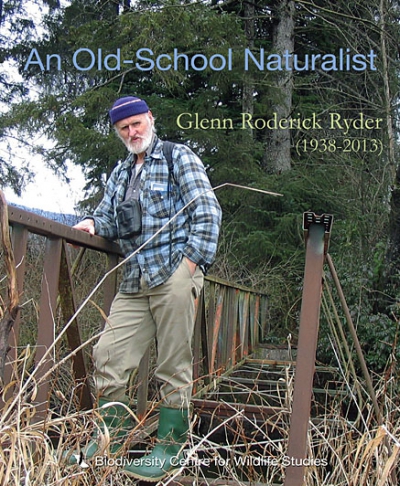
Wildlife Afield, Volume 10, Number 2 GLENN RODERICK RYDER: An Old-School Naturalist The story of Glenn's fascinating and challenging life Possibly for the first time in British Columbia an ordinary, non-professional naturalist has been honoured with a detailed account of his contribution to awareness of nature and science and for his conservation efforts. Chris Siddle, Vernon
Copies have been mailed to members and are also available from the Biodiversity Centre for Wildlife Studies without a membership for $25 CDN (postage included; all proceeds to BCFWS) Order your copy today Purchase by cheque *****
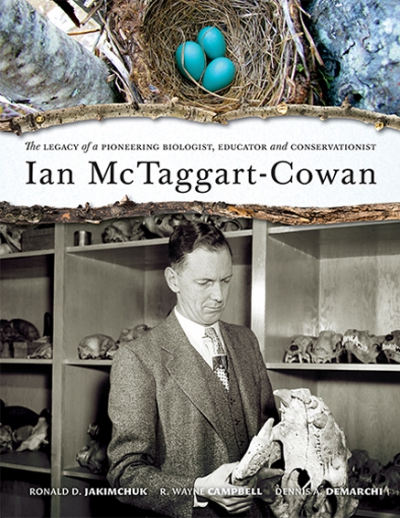
The Legacy of a Pioneering Biologist, Educator and Conservationist Ian McTaggart-Cowan
To order your copy click here |